
Your temples might not be the first place you think about when it comes to facial aging, but they can make a noticeable difference in your overall facial appearance.
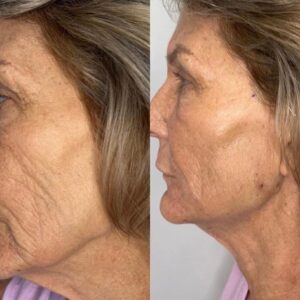
As we age, natural changes in facial fat, bone structure, and skin can contribute to hollow-looking temples. These changes may create a more angular appearance or affect the transition between the forehead, temples, and cheeks.
At Scottsdale Skin & Holistic Health, we offer personalized consultations for individuals exploring temple filler in Scottsdale and other facial rejuvenation options.
What Is Temple Filler?
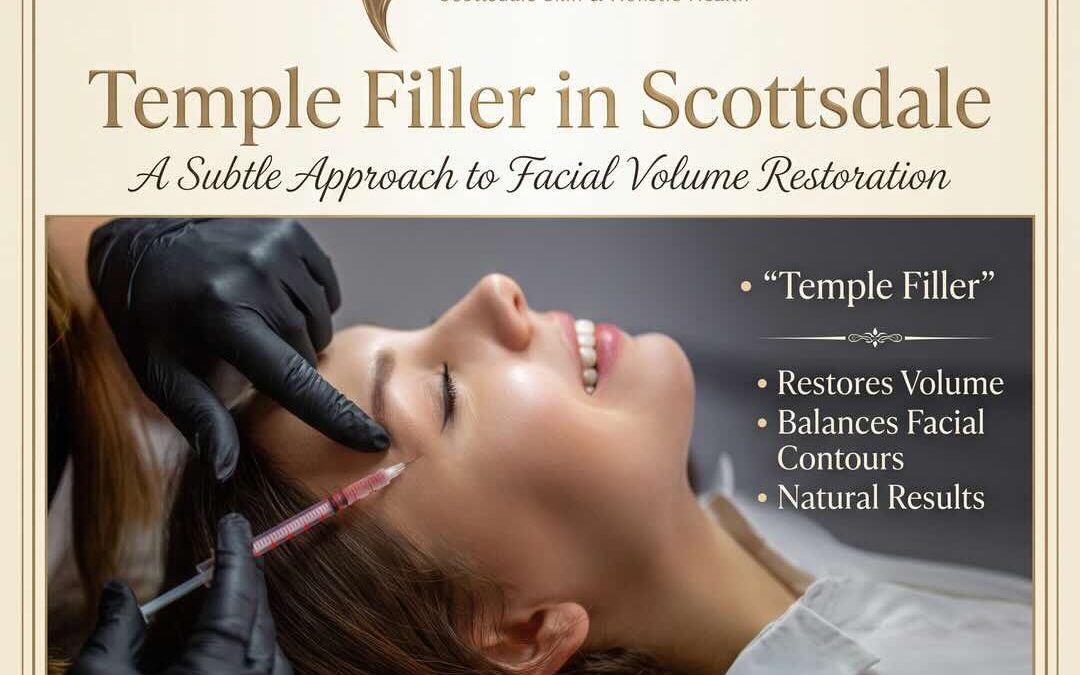
Temple filler is a cosmetic injectable treatment that may be used to restore volume in the temporal region, located on either side of the forehead above the cheekbones.
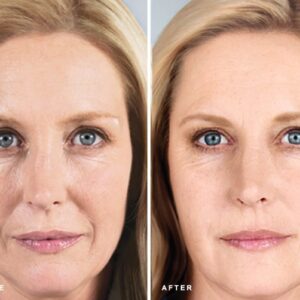
Depending on a patient’s anatomy and treatment goals, an appropriately selected dermal filler may help soften the appearance of hollow temples and improve the visual transition between facial features.
Because the temple region contains important blood vessels and other anatomical structures, treatment requires careful evaluation, appropriate product selection, and an experienced, qualified injector.
Why Do Temples Lose Volume?
Temple hollowing can develop for several reasons, including:
- Natural changes in facial fat distribution with age
- Age-related changes in underlying bone and soft tissue
- Genetic facial structure
- Changes in weight and facial fullness
- Individual differences in facial anatomy
Temple hollowing is not necessarily a sign that treatment is needed. However, some individuals choose to explore cosmetic options to address changes in facial contours.
Potential Aesthetic Benefits of Temple Filler
1. Softening the Appearance of Hollow Temples
For appropriately selected patients, filler may help restore fullness in areas where volume loss has created a hollow appearance.
2. Supporting More Balanced Facial Contours
The temples contribute to the shape of the upper face. Carefully planned volume restoration may help create a smoother-looking transition from the forehead toward the cheeks.
3. Creating a Subtle, Refreshed Appearance
Temple filler is often considered by people seeking modest changes rather than a dramatic transformation. The degree of improvement depends on facial anatomy, product selection, and treatment technique.
4. Complementing Other Facial Aesthetic Treatments
Temple volume is only one component of facial balance. During a consultation, your provider may also discuss other dermal filler options in Scottsdale or treatments that address different aesthetic concerns.
Why Temple Filler Requires Special Expertise
Unlike some other cosmetic treatment areas, the temples have complex vascular anatomy. Injecting dermal fillers into or around blood vessels can cause serious complications, including vascular occlusion, tissue damage, and, in rare cases, blindness or stroke.
For this reason, temple filler should never be treated as a routine, risk-free procedure. A qualified healthcare provider should evaluate your anatomy, discuss the risks and alternatives, and determine whether the procedure and proposed filler are appropriate.
Not every dermal filler is FDA-approved for every facial area. Your provider should explain the specific product being considered and whether its proposed use is within its FDA-approved indications.
What Happens During a Temple Filler Consultation?
At Scottsdale Skin & Holistic Health, the first step is an individualized consultation.
Your provider may:
- Review your aesthetic concerns and treatment goals
- Evaluate facial proportions and temple anatomy
- Discuss relevant medical history and previous cosmetic procedures
- Explain appropriate filler options and potential alternatives
- Review potential side effects, complications, and aftercare
- Determine whether treatment is suitable for you
Some patients may be better candidates for another approach or may be advised against temple filler based on their individual circumstances.
Temple Filler vs. Other Facial Rejuvenation Treatments
Different cosmetic treatments address different aspects of facial aging.
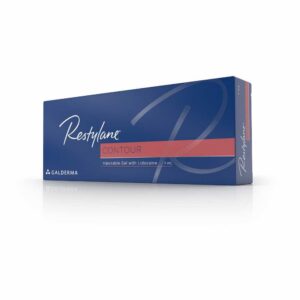
Dermal Fillers: Certain fillers can add volume or modify facial contours in appropriately selected treatment areas. Learn more about our facial filler services.
Sculptra: This injectable biostimulator is used for specific aesthetic indications and works differently from traditional volumizing fillers. Explore Sculptra in Scottsdale.
Ultherapy: This ultrasound-based procedure is designed to address certain types of skin laxity rather than replace lost facial volume. Discover Ultherapy in Scottsdale.
Microneedling: This treatment focuses primarily on skin texture and appearance, rather than restoring volume in hollow areas. Learn about Microneedling in Scottsdale.
Your provider can help explain the differences and discuss which options, if any, fit your goals.
How Long Does Temple Filler Last?
The duration of results varies depending on the filler formulation, injection location, individual metabolism, and other factors. Some fillers may provide effects lasting several months or longer, but individual results and maintenance needs differ.
Dermal fillers are not necessarily completely reversible or predictable in how long they remain in tissue. Your provider should discuss the expected duration and available management options for the specific product used.
Why Choose Scottsdale Skin & Holistic Health?
Scottsdale Skin & Holistic Health is a family-owned Medspa that has served the Scottsdale community for over 19 years, including 16 years at the same North Scottsdale location.
We believe aesthetic treatments should begin with education, thoughtful evaluation, and realistic expectations.
Our approach emphasizes:
- Personalized consultations
- Individual facial anatomy and treatment goals
- Clear discussions about benefits, risks, and alternatives
- Natural-looking aesthetic goals
- Professional, patient-centered care
Frequently Asked Questions About Temple Filler
Can temple filler help hollow-looking temples?
Temple filler may improve the appearance of hollow temples in appropriately selected patients. Suitability depends on individual anatomy, the filler used, and professional assessment.
Is temple filler safe?
Temple filler carries important risks because of the region’s complex vascular anatomy. Complications can include swelling, bruising, infection, vascular occlusion, tissue injury, and rare but serious vision-related or neurological complications. A qualified injector and careful patient selection are essential, but they cannot eliminate all risks.
Will temple filler look natural?
Subtle, balanced results may be possible, but appearance varies by individual. Your provider can discuss realistic expectations and whether volume restoration is appropriate.
Is there downtime after temple filler?
Temporary swelling, tenderness, or bruising may occur. Recovery experiences vary, and your provider will explain activity restrictions, aftercare, and warning signs requiring urgent medical attention.
How do I know if I am a candidate?
A professional consultation is necessary to review your medical history, facial anatomy, aesthetic goals, and treatment risks before determining whether temple filler is appropriate.
Explore Temple Filler Consultations in Scottsdale
Sometimes a small area can make a meaningful difference in facial balance.
If you’re interested in learning more about temple volume restoration, the team at Scottsdale Skin & Holistic Health can help you explore your options through an individualized consultation.
Scottsdale Skin & Holistic Health
7500 E. Pinnacle Peak Rd. #A207
Scottsdale, AZ 85255
Phone: 480-419-6996
Book Your Consultation | Find Us on Google Maps
Medical disclaimer: This article is for general educational purposes and does not replace an individualized medical consultation. Dermal filler procedures carry risks, and results vary. Product selection, approved indications, and suitability should be reviewed with a qualified healthcare provider.